
October 26, 2026
Prime Environmental
Asbestos testing in Denver means a certified inspector takes small samples of the materials you plan to disturb and sends them to a lab, which reports whether each one contains asbestos. You need that answer before you renovate, remodel or demolish an older building, because the result decides whether the work can go ahead as planned or the material has to be removed by a licensed contractor first.
Most homes and buildings in the Denver metro built before 1980 have at least one material worth testing: popcorn ceilings, old vinyl floor tiles and their glue, pipe and boiler insulation, drywall joint compound and some siding. You cannot tell by looking. Testing is how you find out what is there, and it is the step that lets everything after it be priced on facts instead of guesses.
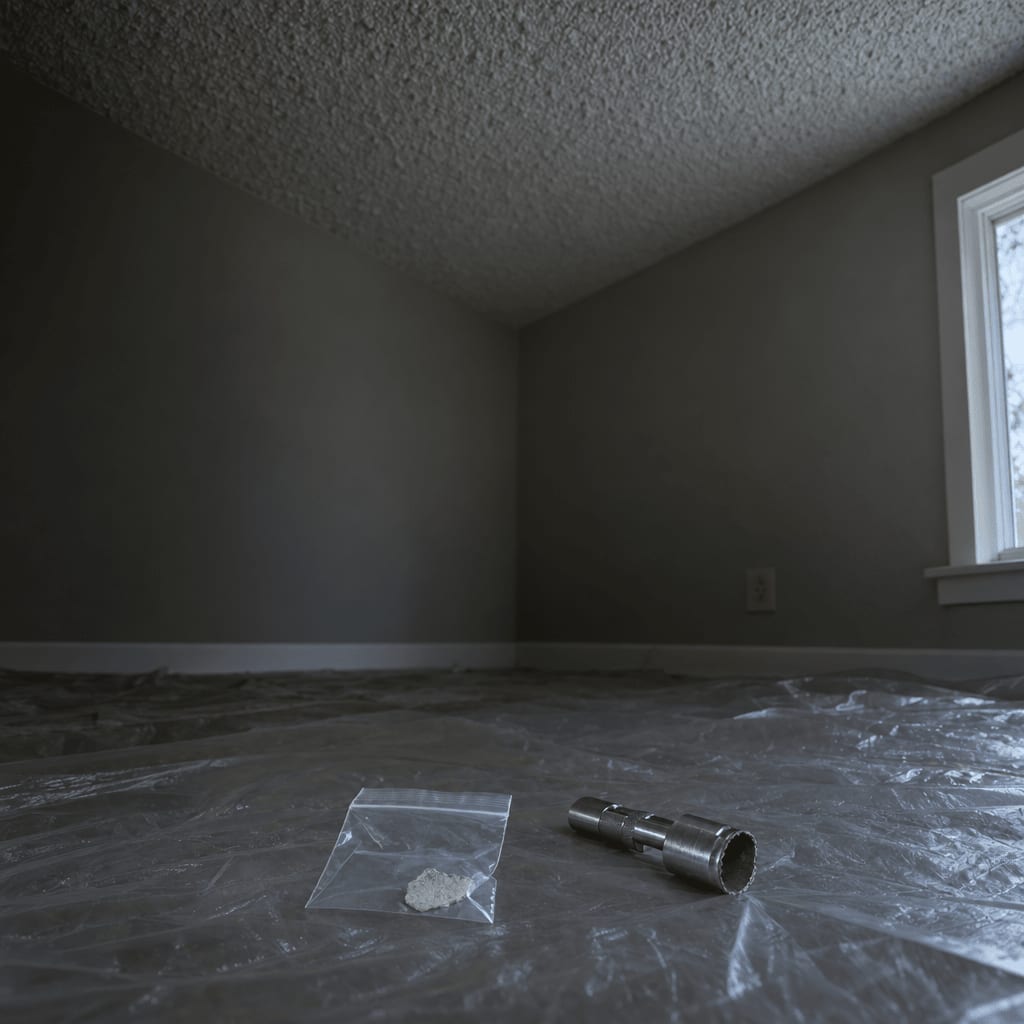
In Colorado, an asbestos abatement company is not allowed to test the materials it will remove. The state's asbestos regulation requires the certified building inspector who identifies asbestos to be independent of the abatement contractor that will remove it, to prevent any conflict of interest. The air clearance test at the end of a removal has to come from an independent certified air monitoring specialist too.
That rule protects you. The result that decides whether anything has to come out, and what the removal will cost, comes from someone with nothing to gain from the removal. Prime Environmental is an asbestos abatement contractor, so we do not test: your inspection comes from an independent certified inspector, and we work from their report.
Colorado's rules turn on how much material your project will disturb. The Colorado Department of Public Health and Environment (CDPHE) sets "trigger levels", and if the materials your project touches are above them, they have to be inspected by a Colorado-certified asbestos building inspector before work starts, or treated as if they contain asbestos.
For a single-family home, the trigger levels are:
For public and commercial buildings the levels are higher: 260 linear feet on pipes and 160 square feet on other surfaces. A demolition is different again, because CDPHE requires notice before any facility is demolished, and an inspection comes first.
If testing finds asbestos above those levels, removal usually has to be done by a state-certified General Abatement Contractor, and CDPHE has to be notified 10 business days before the removal starts. There is a narrow exception for homeowners working on the single-family home they live in, but the material is no less hazardous when the owner disturbs it. You can read the state's own summary on the CDPHE asbestos guidance page.
An inspection is quick and much less disruptive than most owners expect.
The inspection only covers what is sampled. If your plans change and the work will reach a new area, test that area too before anyone starts cutting.
A lab result lists each sample with a result such as "none detected" or a percentage of a named type of asbestos.
"None detected" means the lab found no asbestos in that sample. That material can usually be handled like any other building material during your project. Keep the report, because your contractor, a buyer or a city inspector may ask to see it.
A material with more than 1% asbestos counts as asbestos-containing material under federal and Colorado rules. A positive result does not always mean it must come out. Material in good condition that your project will not touch can often stay where it is. What changes is what you are allowed to do to it: if your renovation or demolition will disturb it above the trigger levels, it has to be removed under state rules before that work begins.
Sometimes the surprise is in a material nobody suspected, such as the glue under a floor or the compound on a wall. That is exactly why testing comes before the work, not during it. If you have already started and find something suspicious, stop, close off the room and get it tested before going further.
A positive result is the start of a plan, not the end of your project. With the report in hand, Prime Environmental can tell you which materials need to come out, how the work will be contained and how long it will take.
When removal is needed, the work follows the same order on every job:
Our asbestos abatement service page explains each of these steps in more detail. If you are buying or renovating an older home, our guide to asbestos in pre-1980 Denver homes covers where it tends to hide, and our post on popcorn ceilings and the asbestos risk covers the most common material people have tested.
Have your inspection report? Call Prime Environmental at (303) 720-5111 for asbestos removal across the Denver metro.
These are the questions Denver owners ask most often before they book a test.
Home test kits exist, but in Colorado a project above the trigger levels needs an inspection by a certified asbestos building inspector, and a kit result will not satisfy that requirement. Cutting a sample yourself can also release fibers if it is not done wet and sealed. A professional inspection is the safer route and gives you a report you can use.
If your home or building was built before 1980 and the work will disturb more than the trigger levels, yes. Even on smaller jobs, testing first is the only way to know whether the ceiling, floor or wall you are about to open is safe to cut.
Not always. Material in good condition that will not be disturbed can often be left in place. Removal becomes necessary when your renovation or demolition will disturb it above the trigger levels, or when it is damaged and breaking down.
No. Under Colorado law, the certified inspector who identifies asbestos must be independent of the abatement contractor that will remove it, to prevent any conflict of interest. The final air clearance test must also be done by a certified air monitoring specialist who is independent of the removal contractor. An abatement company like Prime Environmental does not test the materials it removes: have an independent inspector test first, then get removal quotes based on that report.
Asbestos testing is a small step that protects everything after it: your health, your schedule and your budget. Have an independent certified inspector test the materials your project will touch, read the report with someone who can explain it, and only then decide what needs to happen next.
Contact Prime Environmental once you have your inspection report, for asbestos removal anywhere in the Denver metro.
Our team of certified professionals is always ready to protect your home or business. Contact us today and get a FREE estimate.