
If your Colorado home feels sticky and smells musty in the summer even though it barely rains, the cause may be somewhere you rarely look: the crawl space beneath your floors. Crawl space moisture in Colorado spikes in summer through a humidity cycle most homeowners never see, and because the air down there doesn’t stay down there, that dampness rises into the living space, driving up humidity and setting the stage for mold. Understanding why a crawl space gets humid in summer, and how that moisture reaches the rooms above, is the key to fixing it for good.
The counterintuitive part is that summer, not the wet spring, is often when crawl space moisture is worst. Warm, humid outdoor air enters a vented crawl space, meets the cool surfaces below your home, and condenses into liquid moisture, the same way a cold drink sweats on a summer day. That condensation dampens the crawl space, and the moisture it adds doesn’t stay put.
At Prime Environmental, our focus is the environmental consequence of that moisture: the mold and air-quality problems that a damp crawl space creates throughout the home. This guide explains the summer humidity cycle in crawl spaces, how that moisture rises into living areas, the warning signs to watch for, and how professional mold remediation and moisture control resolve it.
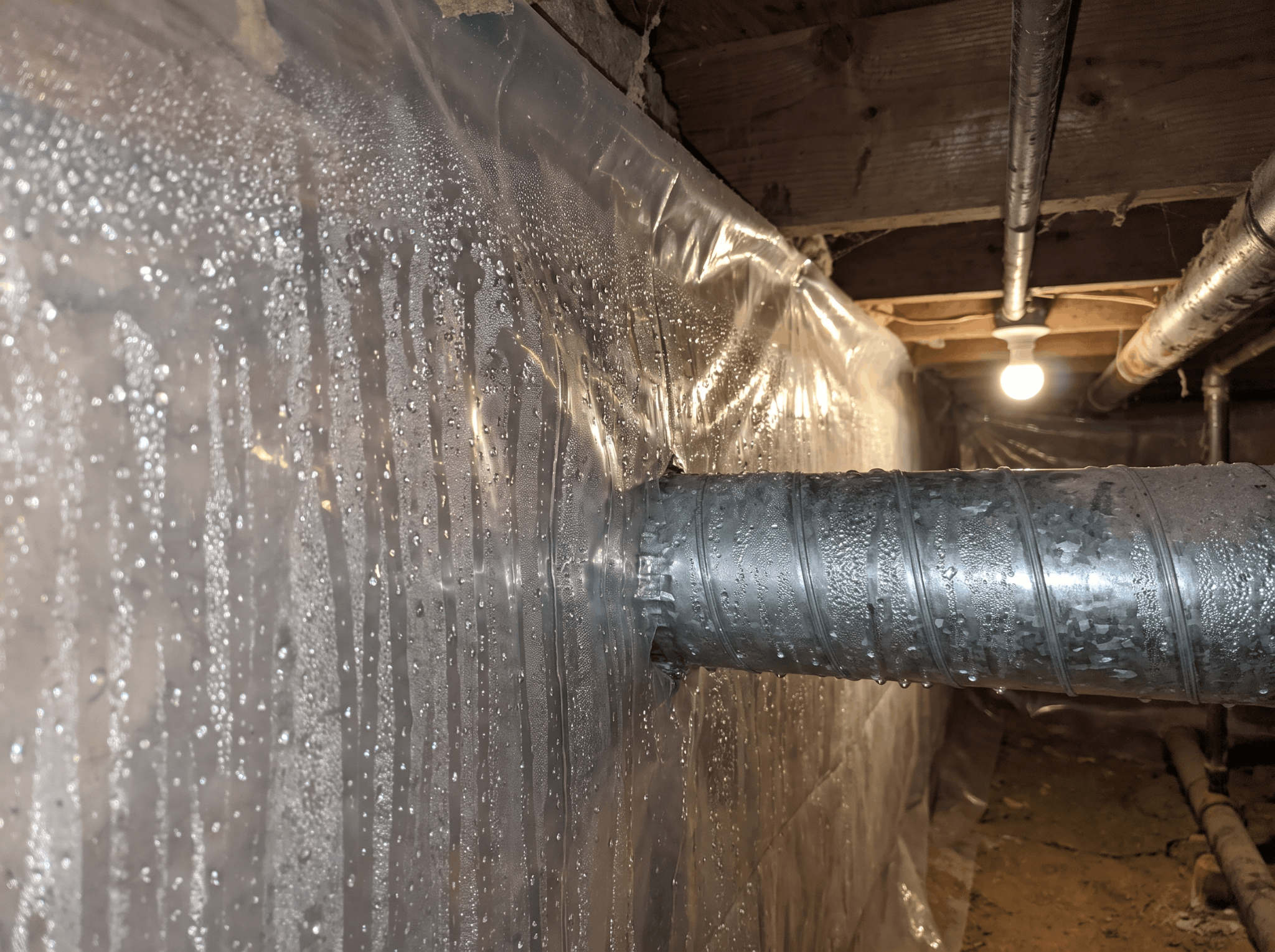
The reason a crawl space gets humid in summer comes down to a collision between warm, moist outdoor air and the cool surfaces beneath a home. Many older Colorado homes have vented crawl spaces, open to the outside air by design, and in summer that design works against them.
Here is the cycle. On a warm summer day, outdoor air carries a significant amount of moisture. When that warm, humid air flows through the crawl space vents, it meets surfaces that stay cool because they are shaded and in contact with the earth, the ground, the foundation walls, and cold water pipes. When warm, humid air touches a cool surface, it cannot hold as much moisture, and the excess condenses into liquid water, just like beads of water forming on the outside of a cold glass. That condensation collects on the vapor barrier, the framing, the ductwork, and the pipes, leaving the crawl space damp. Because summer air is both warmer and more humid, and because the ground stays cool, this cycle runs strongest in the very season homeowners least expect it.
Left alone, this repeats day after day through the summer, keeping the crawl space persistently moist. And a persistently moist crawl space is a problem not only for the space itself but for the entire home above it, which is where the environmental risk, and the need for professional mold remediation, comes in.
It seems logical that opening crawl space vents would dry the space out in summer, but the opposite is often true. Warmer air holds more moisture, so summer air ventilating a crawl space brings more water vapor in, not less. When that moisture-laden air hits the cool surfaces below the home, it condenses and adds moisture rather than removing it. This is why relying on vents to dry a crawl space in a humid stretch can actually feed the problem, and why the season that feels like it should help is often the one that hurts most.
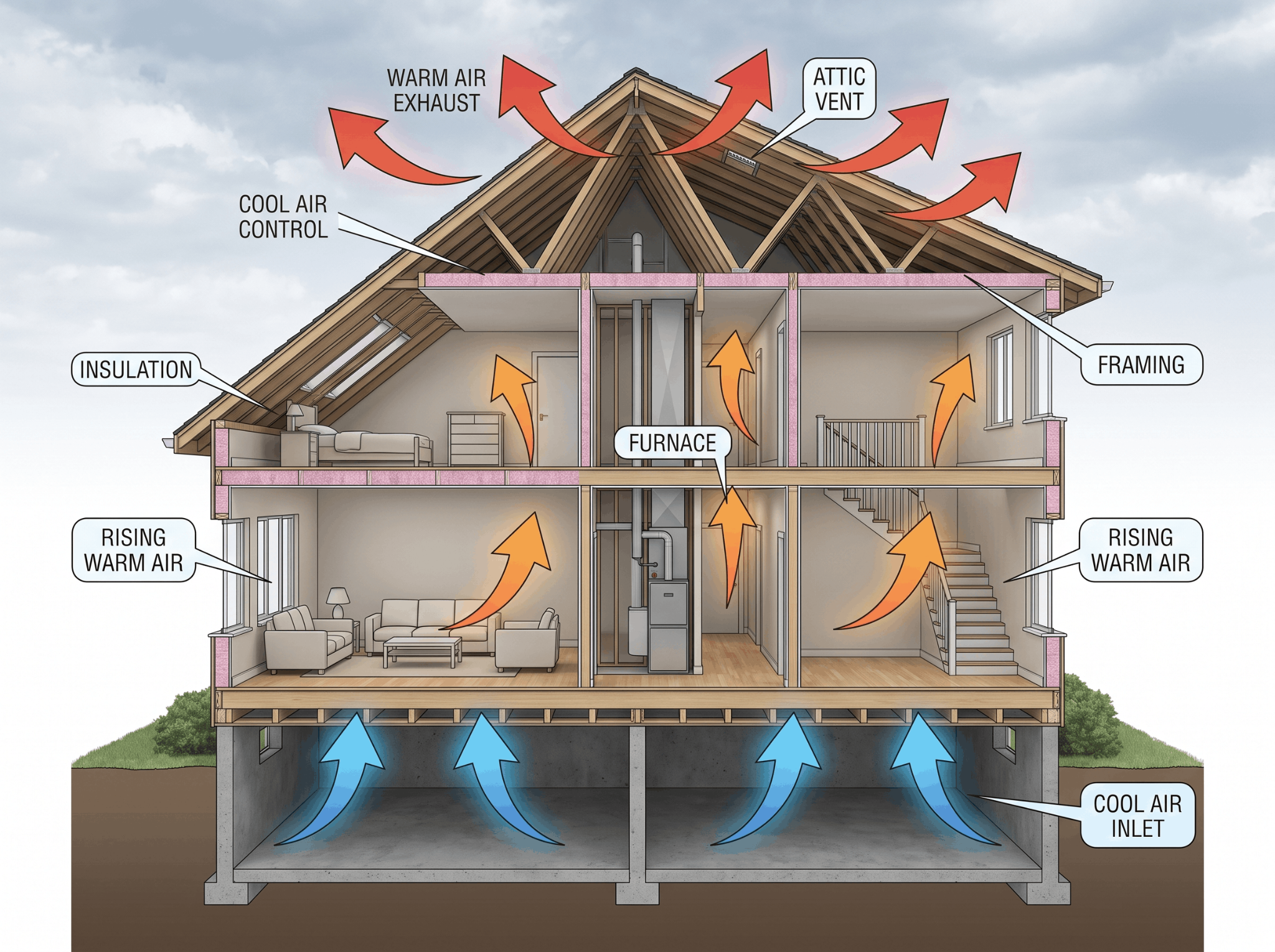
A damp crawl space would matter far less if the moisture stayed down there, but it doesn’t. Through a process called the stack effect, air and the moisture it carries move upward from the crawl space into the living space, which is why a hidden moisture problem below the floor becomes a comfort and health problem in the rooms above.
The stack effect works like a chimney. Warm air in a home rises and escapes through upper levels, and as it does, it draws replacement air upward from the lowest parts of the house, including the crawl space. Studies of home airflow have found that a large share of the air on a home’s main floor originates in the crawl space or basement below. That means whatever is in the crawl space air, humidity, musty odors, and mold spores, gets pulled up into the living areas along with it. A crawl space that is damp and musty doesn’t stay contained; it continuously seeds the air above with moisture and whatever is growing down there.
This connection between the crawl space and the living space is what makes crawl space moisture an environmental issue for the whole home. It explains why a home can feel humid and smell musty upstairs when the actual source is out of sight below, and why solving the problem means addressing the crawl space itself, not just running a dehumidifier in the living room.
The stack effect is the natural upward movement of air through a building, driven by the tendency of warm air to rise. As warm air exits through the upper portions of a home, it creates a slight suction that pulls air in from the bottom, drawing crawl space air up through gaps, penetrations, and floors into the living space. This is a continuous, passive process, meaning a damp crawl space is not an isolated pocket but an active source feeding moisture and air into the rooms your family actually uses.
Because the crawl space is out of sight, its moisture problems usually announce themselves through symptoms in the living space rather than in the crawl space itself. Recognizing these signs helps homeowners trace an uncomfortable, musty home back to its actual source. Common indicators include:
When these signs appear together, especially in summer, a crawl space moisture problem is a likely culprit. The visible symptoms are the home’s way of revealing a hidden environmental issue, and catching them early is what allows the moisture, and any mold it has started, to be addressed before it spreads.
Because the summer humidity cycle is driven by outdoor air condensing on cool surfaces, the lasting solution is to break that cycle: seal the crawl space off from the humid outdoor air and control the moisture inside it. This combination of sealing and dehumidification is what resolves crawl space moisture in Colorado for good, rather than fighting it season after season.
Sealing the crawl space, closing it off from the outside air that carries moisture in, stops the condensation cycle at its root, so warm, humid summer air is no longer being invited in to condense on cool surfaces. Adding controlled dehumidification then keeps the sealed space at a stable, dry humidity level year-round. Together, these measures turn a damp, vented crawl space into a dry, controlled one, and because of the stack effect, a dry crawl space means drier, healthier air rising into the living space above. From an environmental standpoint, this is what removes the conditions mold needs and stops the crawl space from seeding the home with moisture and spores.
Where a moisture problem has already led to mold growth in the crawl space, sealing and drying alone are not enough; the existing mold has to be professionally addressed too. That is where Prime Environmental’s mold remediation work comes in, removing established growth on the framing and subfloor and treating the affected area, so the space is both clean and protected against a return. The benefits of resolving crawl space moisture this way include:
Because a damp crawl space is really a whole-home environmental issue, addressing it protects far more than the space itself. Solving the moisture, and remediating any mold it has caused, is what keeps a Colorado home comfortable and healthy through the humid heart of summer. If you suspect the source is below your floors, you can contact our team for a crawl space assessment.
📞 Call Prime Environmental at (303) 720-5111 for a crawl space assessment and mold remediation across the Denver area and the Front Range.
Often, no. It seems logical that open vents would dry a crawl space, but in a humid stretch the opposite tends to happen. Warm summer air holds more moisture, so ventilating with it brings water vapor into the crawl space, where it condenses on cool surfaces like the ground, foundation, and pipes and leaves the space damp. This is why many moisture problems are worst in summer. Sealing the crawl space off from that humid outdoor air, rather than venting it, is generally what stops the condensation cycle and keeps the space dry.
A dehumidifier helps, but on its own it is often fighting a losing battle in a vented crawl space, because humid outdoor air keeps flowing in through the vents to replace the moisture it removes. The more effective approach is to first seal the crawl space off from that outside air, then use controlled dehumidification to maintain a stable, dry humidity level in the sealed space. Sealing addresses the source of the moisture while the dehumidifier manages what remains, and together they resolve the problem rather than just masking it.
Yes, indirectly, through the stack effect. Air naturally rises through a home, drawing crawl space air up into the living space, and a large share of main-floor air can originate below. That means the humidity, musty odors, and mold spores in a damp crawl space get pulled upward into the rooms above. Higher indoor humidity then creates conditions where mold can grow in the living space too. This is why a hidden moisture problem below the floor can show up as musty air, and even mold, in the rooms your family actually uses.
Because the crawl space is out of sight, the signs usually appear in the living space: sticky, humid air in summer despite air conditioning, a persistent musty smell (especially on the main floor), wood floors that cup or buckle, and worsening allergy symptoms at home. Visible clues in the crawl space itself include condensation on the vapor barrier or pipes, damp insulation, and mold on the framing or subfloor. A professional assessment is the reliable way to confirm the moisture source and check whether mold has begun to grow.
A properly sealed crawl space is a long-term solution, with quality materials designed to last many years. The durability depends on the materials used and the conditions of the specific home, and pairing the sealing with controlled dehumidification helps keep the space stable over time. The more important point is that sealing addresses the root cause of the summer moisture cycle rather than treating symptoms, so it resolves the problem on a lasting basis. Where mold was already present, professional remediation ensures the space starts clean, and keeping it sealed and dry is what prevents a return.
Our team of certified professionals is always ready to protect your home or business. Contact us today and get a FREE estimate.
.svg)

.svg)
.avif)