
In the aftermath of a house fire, the damage you can see, the char, the soot, the smell of smoke, is only part of what a home is facing, and fire damage restoration in Colorado is a longer, more involved process than most homeowners expect. Full recovery moves through distinct stages, from the emergency board-up that secures the property, through cleanup and hazardous-material handling, to the drying and remediation that address smoke, odor, and the water left behind by firefighting. Understanding that timeline, and where the hidden environmental hazards lie, is what turns a devastating event into a genuine recovery.
A fire changes a home in ways that go beyond the flames. Smoke and soot penetrate materials and carry odor deep into the structure, the water used to extinguish the fire soaks into everything and creates a mold risk within a day or two, and in older Colorado homes, the fire and the cleanup can disturb hazardous materials like asbestos that were previously stable and undisturbed. Each of these is an environmental concern that a simple cosmetic cleanup cannot resolve.
At Prime Environmental, our role in fire recovery is the environmental and hazardous-material side: safely handling disturbed materials like asbestos, and addressing the moisture and mold remediation that follow firefighting water. This guide walks through the full restoration timeline, the hazards fire leaves behind, and why coordinating environmental work with insurance from day one protects your home and your claim.
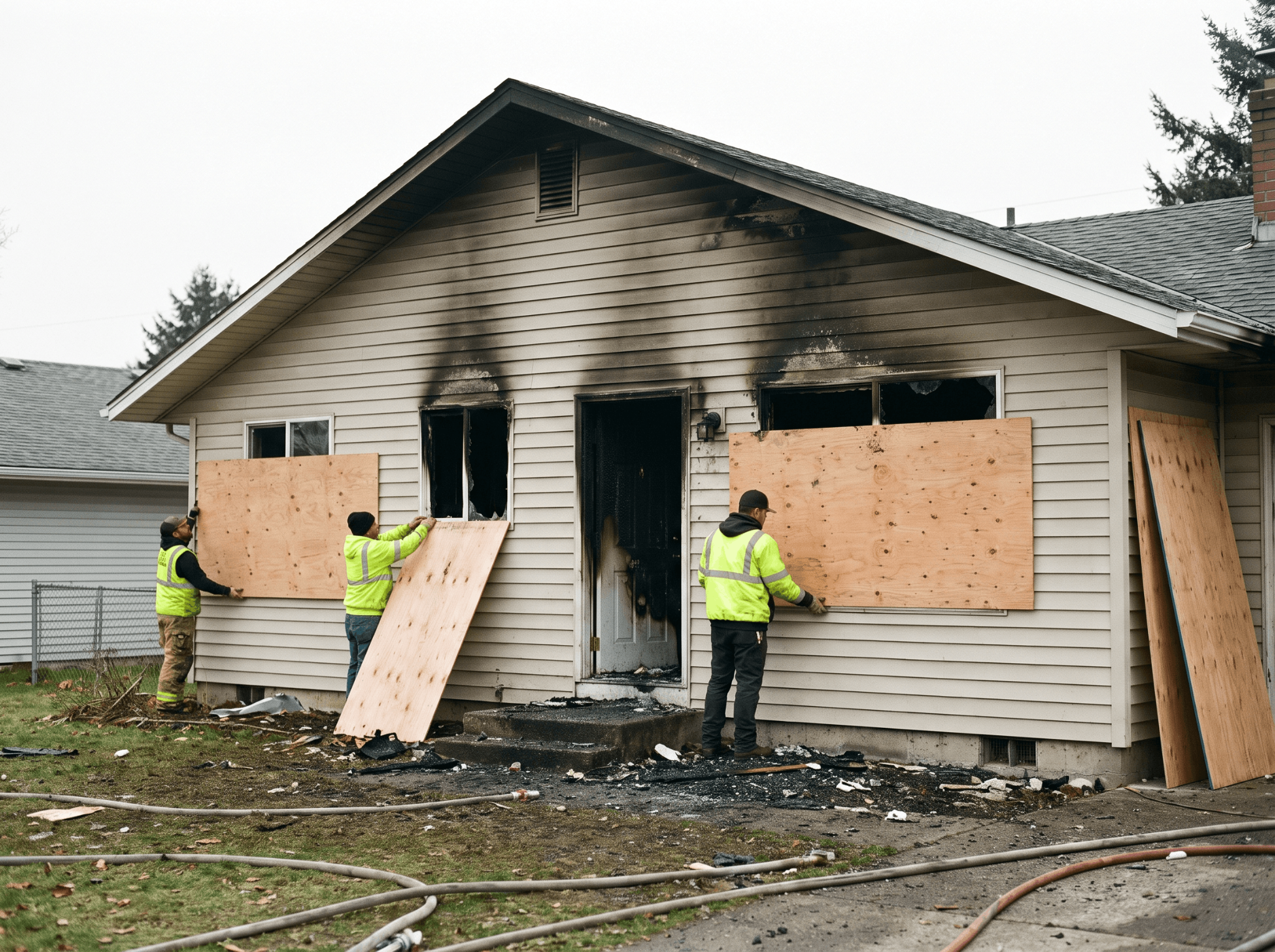
Fire damage restoration is not a single job but a sequence of stages, each of which has to be completed before the next can succeed. Knowing the overall arc helps homeowners understand where they are in the process and why certain steps, especially the environmental ones, cannot be skipped.
The process generally begins with an emergency board-up and stabilization, securing broken windows, doors, and roof openings to protect the property from weather, intrusion, and further damage. Next comes a thorough assessment of the full extent of the damage, structural, smoke, water, and hazardous materials, followed by cleanup: removing debris and unsalvageable materials, cleaning soot, and neutralizing smoke odor. Because firefighting introduces large amounts of water, drying and moisture control run alongside the cleanup to prevent mold. Only once the home is cleaned, dried, and any hazardous materials are safely handled does the rebuild, restoring and reconstructing damaged areas, bring the home back to its pre-fire condition. Each stage depends on the one before it, which is why a rushed or partial approach tends to leave problems that resurface later.
The environmental stages, hazardous-material handling and moisture and mold control, are easy to overlook amid the visible damage, but they are precisely where a home’s long-term safety is decided. That is the part of the timeline where Prime Environmental’s work fits, ensuring the recovery is sound beneath the surface, not just cosmetically restored.
The initial hours after a fire is extinguished have an outsized effect on the recovery. Securing the property quickly prevents weather and intrusion from compounding the damage, and beginning to address the firefighting water fast is critical because mold can establish within 24 to 48 hours of materials getting wet. Soot and smoke residues are also easier to address before they set and spread. Acting quickly in this window, on both the structural stabilization and the environmental fronts, limits how far the damage progresses and how much must ultimately be replaced.
Three of the most persistent problems after a fire are soot, smoke odor, and the water used to put the fire out. Each behaves differently, and each requires the right approach, because these are the issues most likely to linger and cause trouble long after the visible cleanup is done.
Soot is a fine, pervasive residue that settles on surfaces and works its way into porous materials. Wiped incorrectly, it smears and can stain permanently, and it carries odor with it. Smoke odor is even more stubborn, because smoke particles penetrate deep into walls, fabrics, and porous materials, so surface cleaning alone leaves the smell behind to re-emerge. And the water from firefighting, often a great deal of it, soaks into drywall, insulation, subfloor, and framing, creating exactly the hidden dampness that feeds mold. Addressing all three properly means matching the cleaning method to the surface and soot type, using deodorizing techniques that reach trapped odor, and drying the structure thoroughly rather than just the surfaces.
It is the firefighting water in particular that connects fire recovery to environmental work. Water that soaks into materials and lingers unseen behaves just like any other water intrusion, and if it isn’t dried out completely, the fire’s aftermath includes a mold problem on top of everything else. This is why thorough drying and, where needed, mold remediation are an essential part of fire recovery, not an afterthought.
Extinguishing a fire can introduce hundreds or thousands of gallons of water into a home, and that water goes everywhere, soaking into building materials and pooling in cavities. Because attention after a fire is understandably on the visible fire damage, this water is often underestimated. But it provides the moisture mold needs, and combined with an organic surface and a day or two of time, it lets mold establish while everyone is focused on the soot and char. Treating the water as seriously as the fire itself, and drying the structure completely, is what prevents this secondary environmental problem.
One of the least-known dangers of a house fire, particularly in older Colorado homes, is that the fire and the cleanup can disturb hazardous materials that were previously stable. This is a genuine environmental hazard, and it is central to why professional handling matters during fire recovery.
Many homes built before 1980 contain asbestos in materials like floor tile, pipe and duct insulation, popcorn ceilings, and certain wall materials, and older paint layers can contain lead. When these materials are intact and undisturbed, they are generally not a hazard. But a fire, and the demolition and debris removal that follow it, can break these materials apart, releasing asbestos fibers, or disturbing lead-based paint, into the air where they can be inhaled. The same event that damages the home can turn a previously stable material into an airborne hazard. This is why fire cleanup in an older home is not a job to approach casually: disturbing these materials without proper precautions can spread contamination through the property and expose everyone involved.
This is precisely where Prime Environmental’s core expertise applies. As a licensed abatement contractor, we safely handle and remove asbestos and other hazardous materials disturbed by a fire, using proper containment and disposal, so the cleanup does not create a new environmental problem. Our asbestos abatement work is what allows fire recovery to proceed safely in the older homes where these materials are common. Where the presence of asbestos is uncertain, materials should be evaluated through independent, third-party testing before disturbance, and abatement performed based on those results.
Attempting to clean up fire debris yourself in an older home carries a hidden risk beyond the obvious mess. Scooping up broken materials, pulling down damaged ceilings, or tearing out scorched flooring can release asbestos fibers if those materials contain it, and once airborne, the fibers can spread through the home and be inhaled. Because you often cannot tell by looking whether a material contains asbestos, the safe assumption in a pre-1980 home is to treat suspect materials with caution and have hazardous materials professionally evaluated and handled before disturbing them. Professional abatement exists precisely to manage this risk safely.
A house fire almost always involves an insurance claim, and how the recovery is documented and coordinated from the very beginning has a major effect on how smoothly that claim proceeds. Bringing the environmental and hazardous-material work into the process early, rather than treating it as a late add-on, protects both the home and the claim.
Thorough documentation is the foundation. Photographing and recording the damage before cleanup begins, and keeping detailed records of the work performed, including the environmental scope, gives the claim strong support. The hazardous-material portion is especially important to document, because asbestos abatement and proper disposal are specialized work with regulatory requirements, and clear records demonstrate that it was handled correctly. Prime Environmental provides detailed documentation, including records of abatement and clearance, and works directly with insurance carriers and adjusters, so the environmental portion of a fire claim is substantiated and integrated with the overall restoration rather than left as a loose end.
Coordinating this way from day one is what keeps the environmental work from becoming a bottleneck or a dispute later. The benefits of handling fire recovery, and its environmental components, properly include:
Because a fire’s most lasting dangers, disturbed hazardous materials and hidden moisture, are environmental ones, addressing them properly is what makes the difference between a home that merely looks restored and one that is truly recovered. If you’re recovering from a fire in an older home, you can reach out to our team to coordinate the environmental scope early. That environmental focus is central to a complete fire recovery in Colorado.
📞 Call Prime Environmental at (303) 720-5111 for hazardous-material handling, drying, and mold remediation in fire recovery across the Denver area and the Front Range.
It varies widely depending on the severity of the fire and the extent of the damage. A small, contained fire may be restored in a few weeks, while a home with major structural, smoke, water, and hazardous-material damage can take several months. The timeline moves through stages, emergency board-up, assessment, cleanup, drying, hazardous-material handling, and rebuild, and each depends on the one before it. Environmental steps like asbestos abatement and thorough drying add time but cannot be skipped, because they protect the home’s long-term safety. A professional assessment provides a realistic timeline for a specific home.
Yes, when the odor is addressed properly rather than just masked. Smoke odor is stubborn because smoke particles penetrate deep into walls, fabrics, and porous materials, so surface cleaning and air fresheners leave the smell to re-emerge. Fully removing it requires cleaning or removing the materials that hold the odor and using deodorizing techniques that reach trapped smoke residue, combined with thoroughly drying any firefighting water so mold odor doesn’t add to the problem. When the source of the odor is genuinely removed, not just covered up, the smell does not keep returning.
In an older home, yes. Many homes built before 1980 contain asbestos in materials like floor tile, pipe and duct insulation, and popcorn ceilings. Intact and undisturbed, these are generally not hazardous, but a fire and the cleanup that follows can break them apart and release asbestos fibers into the air. The same event that damages the home can turn a stable material into an airborne hazard. This is why fire cleanup in a pre-1980 home should involve professional evaluation and, where needed, licensed abatement of hazardous materials before they are disturbed further.
Yes. Prime Environmental works directly with insurance carriers and adjusters and provides detailed documentation of the environmental and hazardous-material work, including records of abatement and clearance. The environmental portion of a fire claim, such as asbestos abatement and proper disposal, is specialized work with regulatory requirements, so clear documentation is important for substantiating it. Coordinating this work with your adjuster from early in the process, rather than treating it as a late add-on, helps the overall claim proceed smoothly and keeps the environmental scope from becoming a dispute later.
As soon as the property is safe to access and has been secured. Acting quickly matters on several fronts: securing the home prevents weather and intrusion from adding damage, soot and smoke residues are easier to address before they set and spread, and, critically, the water from firefighting can lead to mold within 24 to 48 hours if it isn’t dried out. In an older home, it is also important that any hazardous materials disturbed by the fire be professionally evaluated and handled before further cleanup disturbs them. Starting promptly, on both the structural and environmental fronts, limits how far the damage progresses.
Our team of certified professionals is always ready to protect your home or business. Contact us today and get a FREE estimate.
.svg)

.svg)
.avif)