
Popcorn ceiling asbestos removal in Denver is one of those jobs that sounds simple and is anything but: that textured ceiling in your older home may be more than just a dated design choice. If the house was built before the early 1980s, there is a real chance the texture contains asbestos. This is why popcorn ceiling asbestos removal in Denver is a job that should never be approached as a casual weekend project. Left undisturbed, an asbestos popcorn ceiling is generally low-risk; the danger begins the moment someone starts scraping.
Popcorn ceilings were enormously popular for decades, prized for hiding imperfections and dampening sound, and for much of that period the spray-on texture was made with asbestos. Millions of homes still have these ceilings today, and homeowners eager to modernize often reach for a scraper without realizing what they may be releasing into the air. At Prime Environmental, we help Denver homeowners remove asbestos popcorn ceilings safely and in full compliance with regulations, so a cosmetic upgrade doesn't become a health hazard. This guide explains why these ceilings may contain asbestos, why scraping them yourself is so dangerous, how certified abatement works, and what to expect afterward.
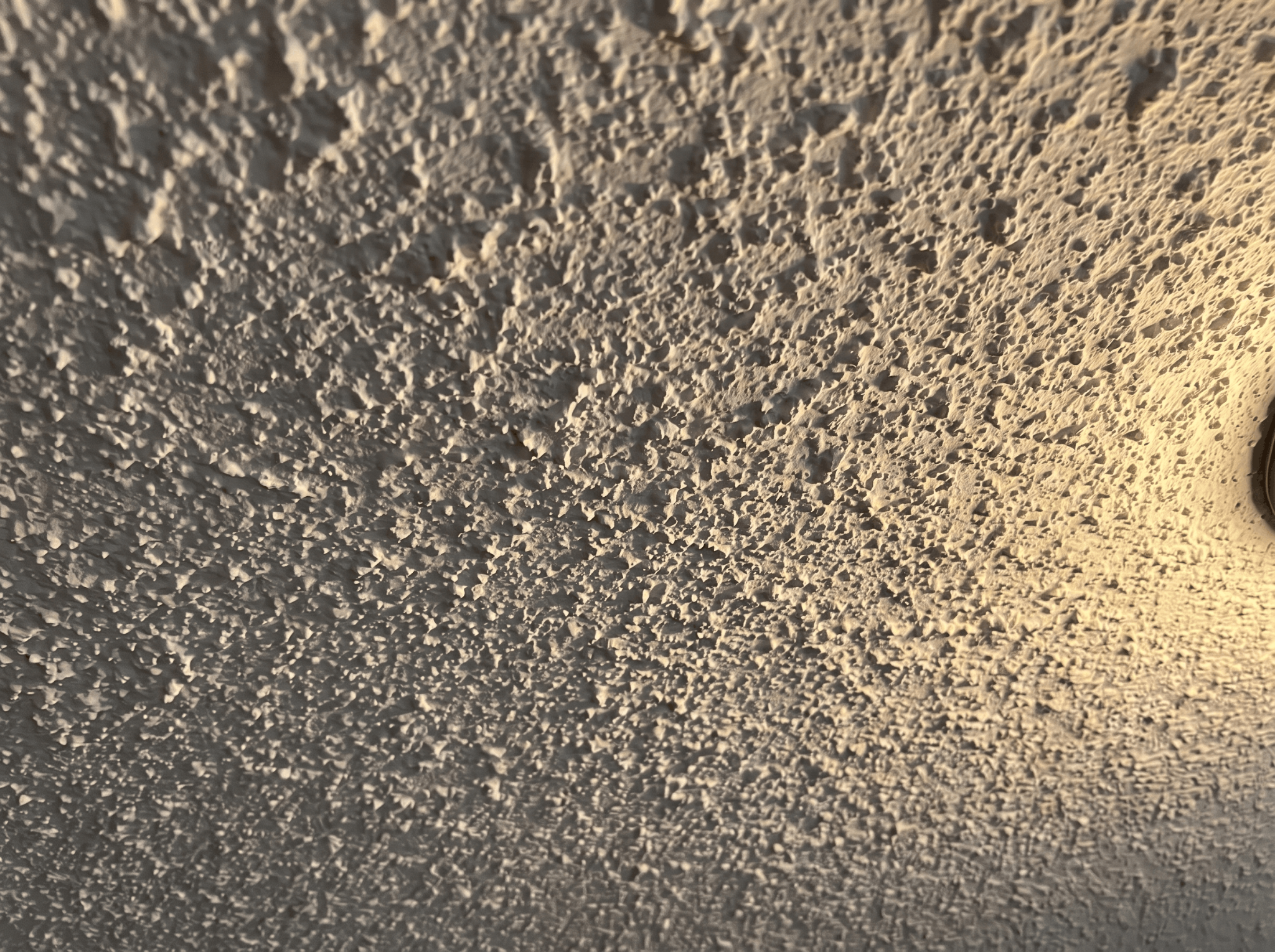
For much of the twentieth century, asbestos was a standard additive in spray-on ceiling texture. It was inexpensive, added fire resistance, and helped the material hold together and perform well, exactly the qualities that made popcorn ceilings so widespread. As a result, homes built or renovated before the early 1980s frequently have ceiling texture that contains some percentage of asbestos fibers.
The age of the home is the key indicator. A pre-1980 build date doesn't guarantee asbestos is present, but it raises the likelihood enough that any popcorn ceiling of that era should be treated as suspect until proven otherwise. Denver's older neighborhoods are full of homes from this period, which is why asbestos popcorn ceilings remain such a common find during renovations across the metro.
Crucially, you cannot tell whether a ceiling contains asbestos just by looking at it: the fibers are microscopic and bound within the texture. The only way to know for certain is laboratory analysis of a sample, which is handled by an independent third-party lab, never something to guess at or attempt yourself. This is the same caution that applies to the other asbestos-containing materials common in older Denver homes, where age and material type signal risk long before anything is confirmed.
Asbestos found its way into popcorn texture for the same reasons it appeared throughout mid-century construction: it was cheap, fire-resistant, and structurally useful. Mixed into the spray-on material, it helped the texture adhere, resist heat, and stay intact over time. Those practical advantages are precisely why it was so common, and why so many ceilings from that era still carry it today, waiting quietly until a renovation disturbs them.
There is no visual test for asbestos in a popcorn ceiling. Two ceilings that look identical may differ entirely, one harmless and one hazardous, because the fibers are microscopic and locked inside the texture. Age and history offer clues, but certainty comes only from laboratory analysis of a physical sample, performed by an independent third-party lab. This is exactly why treating any pre-1980 popcorn ceiling as suspect, rather than assuming it is safe, is the responsible approach.
Of all the do-it-yourself renovation tasks a homeowner might attempt, scraping an asbestos popcorn ceiling is among the most hazardous, and it is exactly the wrong way to handle a suspect ceiling. Proper asbestos abatement exists precisely because disturbing these materials casually can release a burst of fibers into the air in minutes.
An intact popcorn ceiling generally keeps its asbestos fibers bound safely within the texture. Scraping shatters that texture and sends microscopic fibers airborne throughout the room, where they can be inhaled and lodge permanently in lung tissue. Because the work happens directly overhead, a homeowner scraping a ceiling is positioned right in the densest cloud of released fibers, often with little more than a dust mask that offers no real protection against particles this small.
The danger doesn't end when the scraping stops. The fibers settle into dust that spreads through the home, contaminating floors, furnishings, and the HVAC system, and they can remain a hazard long after the project appears finished. What began as a cosmetic upgrade can leave a home with a contamination problem that is far more expensive and difficult to resolve than professional removal would have been in the first place. This is why the safe path is never to scrape first and ask questions later.
Asbestos is only dangerous when its fibers become airborne, and scraping a popcorn ceiling does exactly that. The scraping action breaks apart the texture that binds the fibers, releasing them into the air as a fine, invisible dust. A single afternoon of DIY scraping can generate an intense burst of airborne fibers in an enclosed room: the precise exposure that decades of asbestos safety regulation exist to prevent.
Even after the visible mess is cleaned up, asbestos fibers released during scraping settle into household dust and spread well beyond the room. They work into carpet, soft furnishings, and the HVAC system, where ordinary cleaning cannot safely remove them and where they can be re-disturbed for months. This lingering contamination is what makes improper removal so costly, and why containment and controlled cleanup are central to how professionals handle the job.
Professional asbestos abatement removes a popcorn ceiling through a controlled, contained process designed to keep fibers out of the air and out of the rest of the home. This is the sequence a certified abatement project typically follows:
Following this sequence ensures the asbestos is removed without contaminating the home, and that the finished space is genuinely safe, not merely scraped clean. The controlled, standards-based approach is the entire difference between a safe abatement and a hazardous DIY attempt.
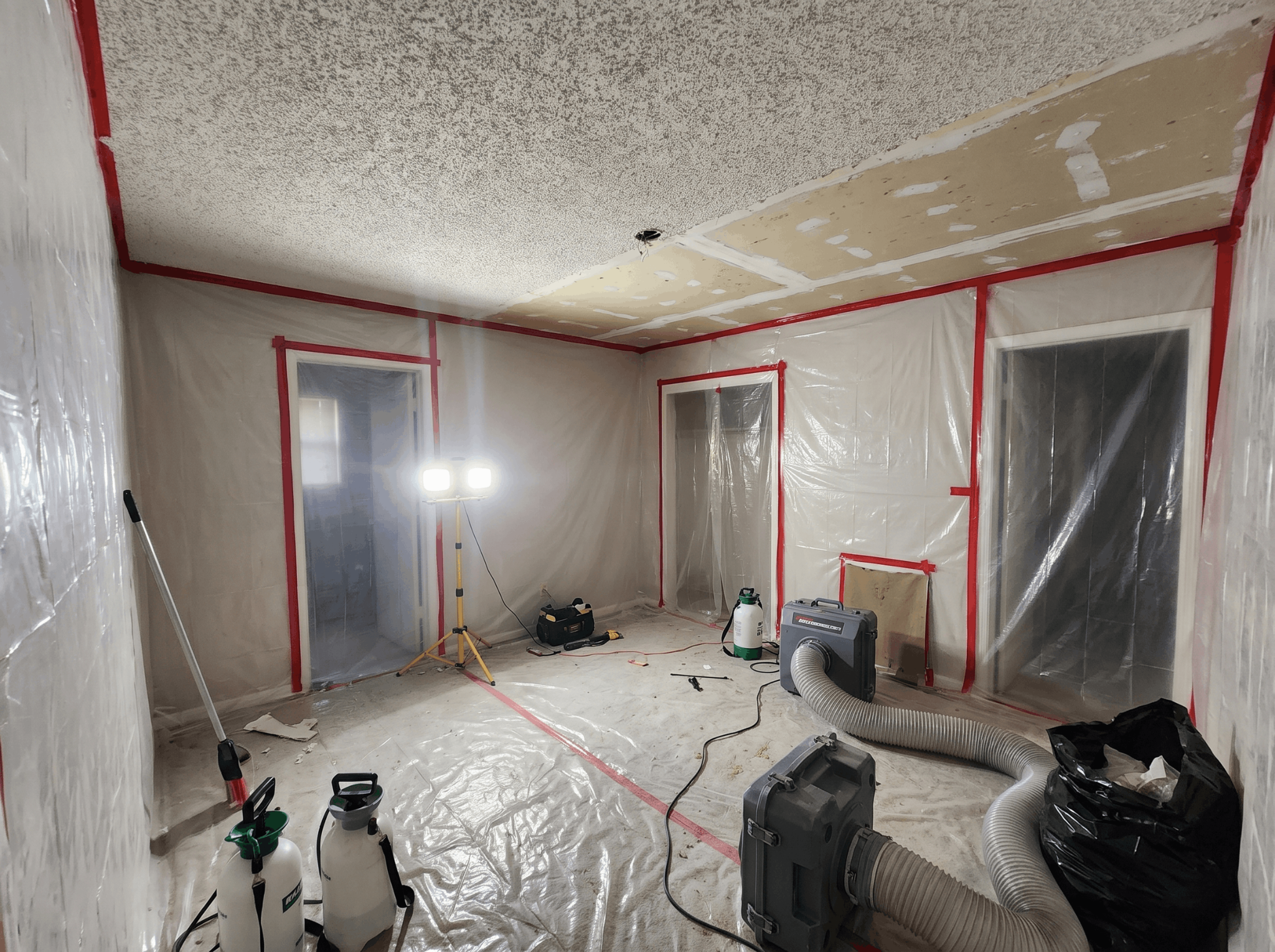
Once the asbestos texture has been safely removed and the space cleared, you are left with a bare ceiling ready to be refinished however you like. Many homeowners choose a smooth, modern finish, while others opt for a new, asbestos-free texture, either way, the result is a clean slate and the peace of mind that the hazard is gone. The removal is what makes the long-postponed update to a dated ceiling finally possible, and safe.
Cost and timeline depend on the size of the area, the number of rooms, and the specifics of the containment and disposal required. A single room is a far smaller undertaking than a whole home, and accessibility and finish choices factor in as well. As a rough Front Range ballpark, asbestos abatement typically runs about $5 to $20 per square foot, so a single average-sized Denver room often falls in the $2,500 to $4,500 range, while a whole-home popcorn-ceiling removal of 1,500 to 2,000 square feet is more commonly $8,000 to $15,000. These are only general figures, because every home is different, the only reliable way to know your numbers is an on-site assessment. Building abatement into the front of a renovation timeline, before any other demolition, keeps the overall project both safer and more predictable.
📞 Call Prime Environmental at (303) 720-5111 to get a popcorn ceiling removal quote for your Denver home.
No, not all of them. Whether a popcorn ceiling contains asbestos depends largely on when it was installed. Ceilings sprayed before the early 1980s frequently contain asbestos, while those installed later usually do not. However, you cannot tell by looking, and renovations sometimes mean newer texture sits over older layers. The only way to know for certain is laboratory analysis of a sample, performed by an independent third-party lab. Until that confirmation, any pre-1980 popcorn ceiling should be treated as potentially containing asbestos.
Generally, yes. An asbestos popcorn ceiling that is intact, undisturbed, and in good condition typically poses little immediate risk, because the fibers stay bound within the texture rather than becoming airborne. The danger arises when the material is disturbed: scraped, drilled, water-damaged, or broken during renovation. If you plan to leave the ceiling completely alone, it may be low-risk, but any project that could disturb it, including some repairs and remodels, calls for professional assessment and abatement first.
Yes. Once the asbestos texture is safely removed and the area is cleaned and cleared, the bare ceiling can be finished however you prefer. Many homeowners choose a smooth, contemporary finish, while others apply a new, asbestos-free texture. The ceiling is essentially returned to a blank surface ready for whatever look you want. Removing the old texture is often what finally makes updating a dated ceiling possible, giving you both a modern finish and the assurance that the asbestos concern is fully resolved.
The cost depends on the size of the area, the number of rooms, how accessible the ceilings are, and the containment and disposal the project requires. A single room is very different from a whole home. Because asbestos removal must be done under controlled, compliant conditions, it involves more than simple scraping, which is reflected in the scope. There is no flat rate that fits every home, so the only accurate way to get a figure is an on-site assessment, which Prime Environmental provides before any work begins.
Our team of certified professionals is always ready to protect your home or business. Contact us today and get a FREE estimate.
.svg)

.svg)
.avif)