
Few household emergencies are as alarming, or as hazardous, as sewage backing up into a Denver basement. Beyond the mess and the smell, sewage carries bacteria, viruses, and other pathogens that make it a genuine health risk, which is why sewage backup cleanup in Denver is never a job to approach casually. Contaminated water demands careful decontamination, safe removal of affected materials, and thorough drying to prevent mold afterward.
A sewage backup is classified as Category 3 water, “black water,” the most contaminated category there is, and that classification changes everything about how the cleanup must be handled. This is not water you can simply mop up; it requires containment, disinfection, and proper disposal. At Prime Environmental, our focus is the environmental side of these events: safely decontaminating the affected space and, critically, removing and preventing the mold that contaminated moisture leaves behind. This guide explains what causes sewage backups in Denver, why black water is so dangerous, the immediate safety steps to take, and how professional decontamination protects your home and health.
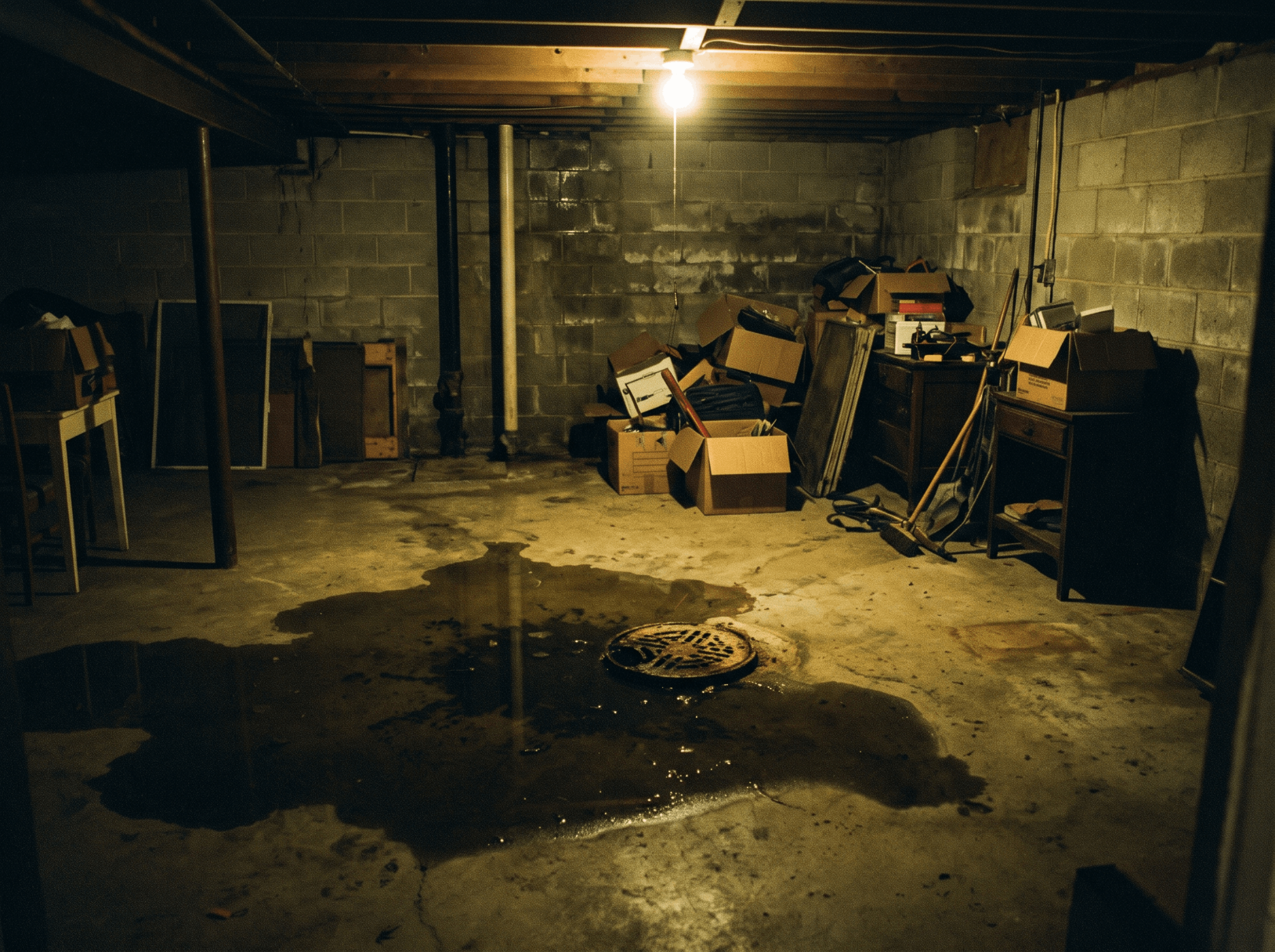
Sewage backups happen when wastewater cannot flow away from the home as it should and instead reverses course, pushing up through the lowest fixtures, usually basement floor drains, toilets, and laundry connections. Several causes are especially common in Denver homes, and understanding them helps explain why some properties are more vulnerable than others.
Tree root intrusion is one of the most frequent culprits. Denver's mature trees send roots seeking moisture, and over years they can infiltrate and eventually block the sewer lateral connecting a home to the municipal main. Aging infrastructure is another: older neighborhoods often have clay or cast-iron sewer lines that crack, corrode, or collapse with age, restricting flow until a backup occurs. And heavy rain, particularly during Denver's summer monsoon storms, can overwhelm the municipal system, forcing wastewater backward into connected homes.
Whatever the trigger, the result is the same: contaminated water entering the home at its lowest point and spreading across the basement floor. Because that water is hazardous and soaks quickly into porous materials, the response has to prioritize safety and decontamination from the very first moment, not simply water removal.
In Denver's established neighborhoods, tree roots and aging pipes are a frequent combination behind sewage backups. Roots seek out the moisture in sewer laterals and work into small cracks, gradually obstructing the line, while decades-old clay and cast-iron pipes crack and corrode on their own. Together they slowly choke a home's wastewater flow until a backup finally forces the problem into view, usually in the basement.
Denver's summer monsoon storms can drop intense rainfall in a short window, and in areas where stormwater and sanitary systems are strained, that surge can overwhelm the municipal lines. When the system can't carry the volume, pressure builds and wastewater can travel backward into connected homes through the lowest fixtures. This is why sewage backups often spike in the days around the heaviest summer storms.
Not all water damage is equal, and sewage sits at the most dangerous end of the scale. The restoration industry classifies water into three categories by contamination level, and sewage backup is Category 3, known as black water, the most hazardous of all. It may contain bacteria, viruses, parasites, and other pathogens, along with chemicals and organic waste, any of which can cause serious illness through contact, ingestion, or inhalation.
This is why sewage backup cannot be treated like a clean-water leak. Simply mopping it up or running a household wet-vac not only fails to address the contamination but can spread pathogens further and expose whoever is doing the work. The porous materials it soaks, carpet, padding, drywall, and more, absorb the contamination deep into their structure, where surface cleaning cannot reach and where bacteria continue to thrive.
The hazard also doesn't end once the water is gone. Contaminated moisture left in materials and the structure creates ideal conditions for mold, adding a second wave of health concerns on top of the initial contamination. This dual threat, immediate pathogens and follow-on mold, is exactly why professional decontamination and thorough drying matter so much, and why the environmental cleanup is as important as removing the water itself.
When sewage backs up into your home, the first priority is protecting your health and safety, not cleaning up. Taking the right precautions before help arrives limits your exposure and prevents the contamination from spreading. If you discover a sewage backup, follow these steps:
These precautions keep you safe in the critical window before trained help arrives. From there, the contaminated space needs proper decontamination and drying, work that requires protective equipment, the right disinfectants, and the experience to handle a biohazard safely.
Cleaning up after a sewage backup is fundamentally a decontamination job, and it follows a careful sequence built around safety, sanitizing, and preventing the mold that contaminated moisture invites. Because Prime Environmental focuses on the environmental and mold remediation side of these events, that final step, stopping mold before it starts, is treated as essential, not optional. This is the order the process typically follows:
Following this sequence ensures the contamination is genuinely removed rather than spread, and that the moisture left behind doesn't become a mold problem, turning a hazardous event into a space that is safe, sanitized, and protected against a second wave of damage.
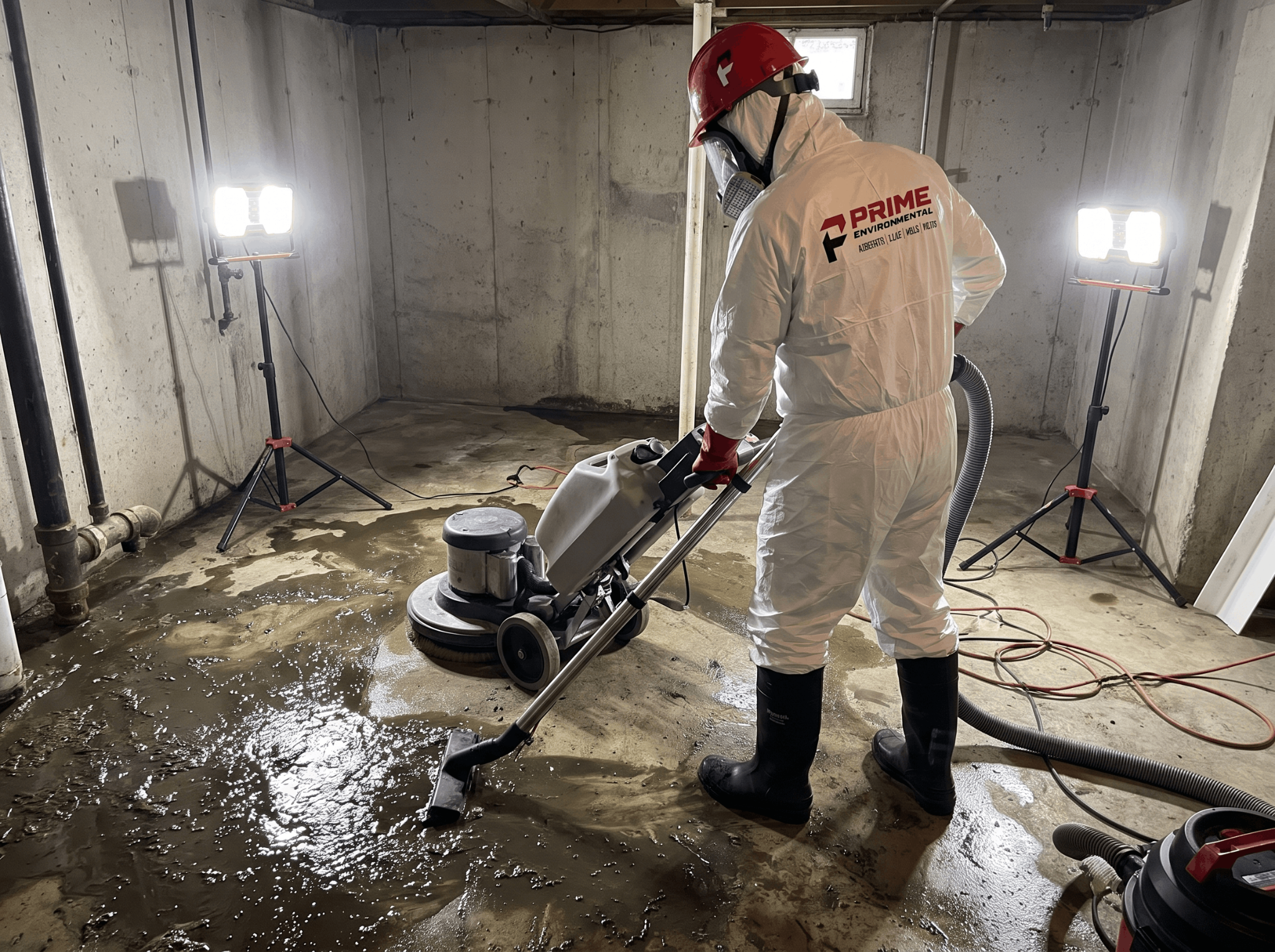
Handling a sewage backup professionally protects far more than the basement floor. Proper decontamination and mold remediation safeguard your family's health and your home in ways a DIY cleanup cannot. The benefits include:
Because the mold that follows contaminated water is often the longer-lasting threat, addressing it as part of the cleanup is what makes a home genuinely safe again, not just dry. That environmental focus, backed by proper containment and treatment, is central to how the space is restored to a healthy condition.
📞 Call Prime Environmental at (303) 720-5111 for safe sewage backup cleanup, decontamination, and mold prevention in the Denver area.
Yes. Sewage backup is Category 3 “black water,” and it can release harmful gases and airborne pathogens into the home. Breathing the fumes and any aerosolized contaminants can cause illness, and the risk grows the longer the sewage sits and as it begins to support bacterial and, later, mold growth. This is why ventilating the area if you safely can, avoiding the space, and calling for professional decontamination are the right responses, rather than spending time in the contaminated area attempting to clean it yourself.
It is strongly discouraged. Sewage is a biohazard containing bacteria, viruses, and other pathogens, and cleaning it without proper protective equipment and disinfection can expose you to serious illness and spread contamination further into the home. Household mops and wet-vacs can't safely decontaminate porous materials, and they can aerosolize pathogens. Professional cleanup uses the right protection, disinfectants, and disposal, and it includes drying the space to prevent the mold that contaminated moisture leaves behind, something a DIY effort almost always misses.
Porous materials that have absorbed sewage typically must be discarded, because they can't be fully decontaminated. That usually includes carpet and padding, affected drywall, insulation, particleboard, and soft furnishings the water reached. Non-porous surfaces, concrete, sealed tile, metal, and solid wood, can often be cleaned, disinfected, and saved. A professional assessment determines exactly what must go and what can be salvaged, so you neither keep something hazardous nor discard more than necessary. Everything removed is bagged and disposed of properly to avoid spreading contamination.
As quickly as possible. Contaminated water spreads and soaks deeper into materials every hour it sits, increasing both the health hazard and the likelihood of mold taking hold. The pathogens in black water don't diminish on their own, and standing sewage steadily raises the risk of a secondary mold problem on top of the initial contamination. Prompt professional decontamination limits the damage, protects your household, and makes the space safe to use again far sooner, so it's best to call for help right away rather than wait.
Our team of certified professionals is always ready to protect your home or business. Contact us today and get a FREE estimate.
.svg)

.svg)
.avif)